Blog
VIBROCORE test
A few weeks ago our Bikeskills.cz team literally got its hands on SPANK handlebars with the so-called VIBROCORE™ core. For us it was a big unknown – we didn't know what to expect from the bars and, honestly, didn't have high expectations, because they're simply 'just' handlebars. But after the test everything changed, and now I'm thinking…. WHY NOT? I'll explain everything below.
WHAT IS VIBROCORE™
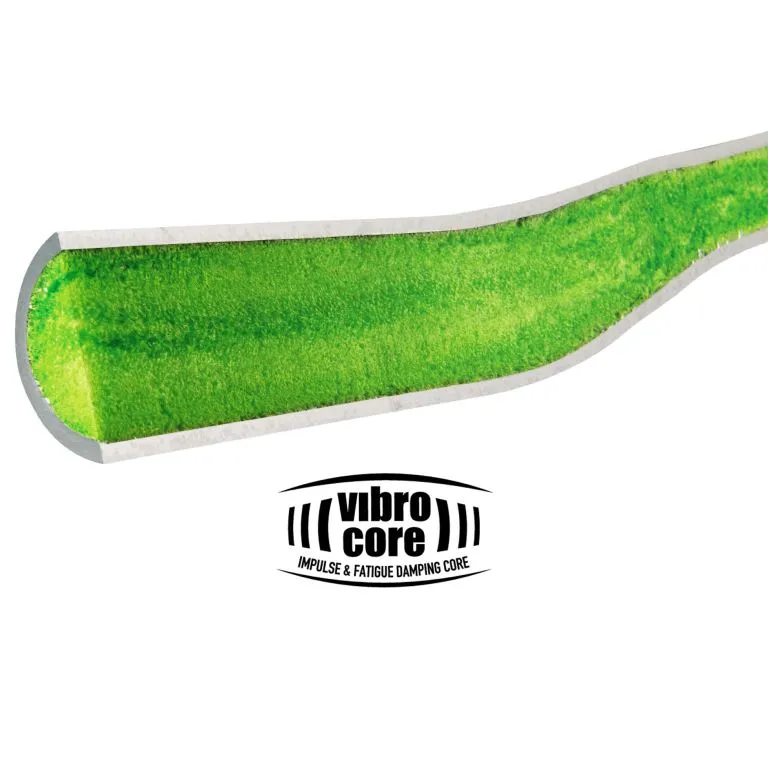
The principle is simple at first glance. It's a foam of a specific density injected into the cavity of the handlebar, filling about 80% of it. Why not all of it? The ends of the bar are foam-free and ready for possible cutting, so you don't immediately cut into the Vibrocore™ foam.
What's more interesting is that the foam has a fairly high density and is also biodegradable. The filling also increases the overall strength of the bar, which is a nice benefit, but certainly not the main goal SPANK set itself. Only when we talk about vibrations does the key word Vibrocore™ come into play.
HOW VIBROCORE™ WORKS
The first thing that comes to mind is absorbing vibrations while riding. Partly yes and partly no. The purpose of the Vibrocore™ filling is not primarily to absorb vibrations (that's more what suspension forks, shocks etc. on your bike are for), but rather to change the vibration frequency. Absorbing vibrations is a small part of it, but not the main purpose of foam-filled handlebars.
Vibrocore™ was developed over several years into a precisely defined type of foam that changes the frequency of vibrations transmitted from the wheels into the handlebars during riding, and from the handlebars on to the rider's hands and forearms.
You can find an interesting video describing the development of Vibrocore™ here:
VIBRATION FREQUENCY
The frequency while riding an MTB is somewhere between 2 and 200 Hz, which is a fairly wide range. It depends on riding style and the surface you're riding on. However, most common vibrations are somewhere between 5 and 50 Hz. Every handlebar, whether carbon or aluminium, also has its own vibration frequency, so it not only nicely transmits vibrations from the wheels, frame, fork etc., but also produces its own vibration – which, simply put, creates….an amazing storm of vibrations.
According to the SPANK website, which describes the whole Vibrocore™ system in more detail (see: https://spank-ind.com/blogs/news/vibrocore™-the-inside-story), it has been shown that vibrations with a frequency of about 8–50 Hz are dangerous for the hands, hand muscles and forearms and can cause so-called HAVS, which can gradually progress to so-called CECS. I'm not an expert or a doctor, but after a few moments on Google I saw some nasty pictures, and neither idea appeals to me at all.
HAVS (Hand Arm Vibration Syndrome) is also known as white finger syndrome, or Raynaud's syndrome, see: https://www.fyzioklinika.cz/clanky-o-zdravi/raynauduv-syndrom, which often accompanies Raynaud's disease, see: https://cs.wikipedia.org/wiki/Raynaudova_nemoc. White to blue fingertips, poor blood circulation and tissue damage, lack of oxygen up to tissue death. Simply nothing pleasant. This
syndrome often appears in professions where you work with tools that cause stronger vibrations, such as saws, drills, demolition hammers and so on. However, when riding a bike, especially an MTB on forest paths, roots and bumpy tracks, you simply can't avoid vibrations either, and everyone holds the bars firmly enough so they don't fly out of their hands.
CECS (Chronic Exertional Compartment Syndrome) which can be a consequence of HAVS and often appears in motorsport, where a firm grip combined with vibrations from the machine is needed. However, it also appears in bodybuilders and, simply, people who pump iron. Loss of strength in the hands and forearm pain are essentially the result, quite often followed by surgery. Look up photos of CECS – it won't be a pretty sight.
PREVENTING PROBLEMS WITH VIBROCORE™
So the foam inside the handlebar doesn't primarily absorb impacts or vibrations. That's simply not what it's there for – it changes the vibration frequency of the bar and wheel away from the dangerous frequencies mentioned, which can (though of course for some people never will) cause damage to the muscles and nerves of the hands or loss of control of the bike and so on.
WHAT WE TOOK AWAY FROM THE TEST
SPANK handlebars are among the best on the market even without Vibrocore™ foam, which has now reached its 6th generation. The SPANK SPIKE 35 handlebar we tested fits perfectly in the hand, and its oversize 35 mm diameter suggests increased overall stiffness for Enduro or DH.
Now let me go back to the opening thought. When someone has devoted so much attention to something like vibrations, vibration frequency and preventing conditions like HAVS and CECS, why not take the chance to give your hands a 'longer lifespan' without pain and problems? You can believe in Vibrocore™ or not, but even if the bars and their internal foam helped prevent problems by just 10% – problems that may not show up on the first ride but, for example, after a long time or in old age…..then…..WHY NOT?
A few shots from the test by the Bikeskills project:
Author: @marektryner